
Corrosion is an inevitable phenomena. No matter how sturdy is the material, it will eventually degrade. However, one area you would definitely want to avoid corrosion - your pipelines. The natural process of corrosion can result in complete failure of the brass pipe fittings and fixtures. This process is referred as dezinfication.
Dezincification is a form of selective corrosion, whereby one of the components of the alloy is removed or leached out. The phenomena is more often with brass alloys which comprises of zinc and copper. Zinc being more reactive metal is leached out of the combination. This generally happens when the composition of zinc is more than fifteen percent. Such corrosion results in white powdery deposit in the inner lining of the fittings. Although shape and appearance of the fittings remain unaffected, it becomes substantially weaker.
Corrosive soil particles and water-borne chemicals are the major cause of such selective corrosion. Generally brass fittings installed in the water transporting pipes are more exposed to the destructive phenomena. Restricted pipe flow increases the chances dezencification, thus resulting in leaks or cracking of the fittings. It is important to identify the problem and take corrective measure before fixture breakage.
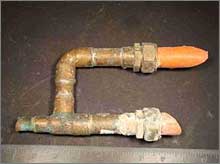 The probabilities of dezincfication can be reduced itself in the manufacturing process by keeping the zinc content below 15% and adding 1% to the alloy. To completely prevent the destructive phenomena, you may add a very small amount of arsenic (0.02% - 0.06%) to the alloy. It is always wise to use a pipe fittings consisting of dezincification-resistant brass alloys.
If you have installed brass fittings and suspect dezinicification, it is advised that you contact an experienced plumber or pipe replacement company immediately. Once there is a leakage in the system or breakage of the pipeline, the situation will be worse and difficult to recover from. It can also cause re-investment in setting up a new pipeline.