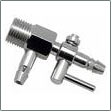
| Purpose | Selection Criteria | Types |
Pipe fittings are widely demanded for any piping and plumbing systems used in industrial and commercial applications. Fittings allow pipes to be joined or installed in the appropriate place and terminated or closed where necessary. Fittings are available in various shapes and sizes. They can be expensive, require time, and different materials and tools to install. They are an essential part of piping and plumbing systems. There are thousands of specialized fittings manufactured. Each type of pipe or tube requires its own type of fitting, but usually all pipe fittings share some common features. Pipe fittings are available everywhere where plumbing materials are sold.
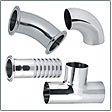
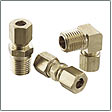
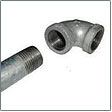
1. Elbows: Such pipe fittings are used to change the direction of the flow. 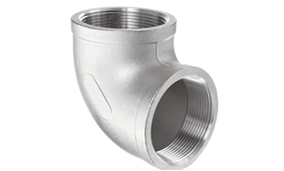 They are majorly available in two standard types - 90 and 45 degree angles owing to their high demand in plumbing. The 90 degree elbow is primarily used to connect hoses to water pumps, valves, and deck drains, while the 45 degree elbow is mostly used in water supply facilities, electronic and chemical industrial pipeline networks, food, air-conditioning pipelines, garden production, agriculture, and solar-energy facility.
Available in: Acrylonitrile Butadiene Styrene (ABS plastic), polyvinyl chloride (PVC), chrome-plated brass, chlorinated polyvinyl chloride (CPVC), stainless steel, malleable (galvanized and black), and copper.
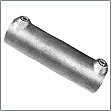
2. Couplings: A coupling is a pipe fitting used to stop leakages 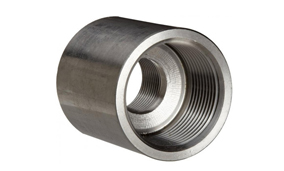 in broken or damaged pipes. The pipes to be connected should be of the same diameter. The two kinds of couplings used in plumbing are regular coupling and slip coupling. The regular coupling is arranged between the two pipes to prevent further leakages with the help of rubber seals or gaskets on the both sides. The slip coupling itself contains two pipes to repair the damaged lengthy pipes.
Available in: ABS, brass, copper, chrome-plated brass, CPVC, PVC, malleable (galvanized and black), and stainless steel.
3. Union: This type of pipe fitting is almost similar 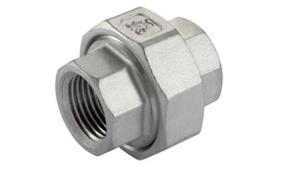 to coupling in terms of functions, but just with a difference, i.e. a union can be removed easily any time while the coupling cannot. A variety of dielectric unions are used to join pipes made of different materials to avoid any kind of galvanic corrosion between them. These pipe fittings comprise of a nut, female and male ended threads.
Available in: Brass, copper, chrome-plated brass, malleable (galvanized and black), PVC, CPVC, and stainless steel.
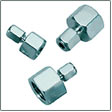
4. Adapters: Adapters are connected to pipes to either increase their 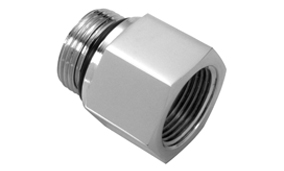 lengths or if pipes do not have appropriate ends. These pipe fittings make the ends of the pipe either male or female threaded as per the need. This permits unlike pipes to be connected without any need of extensive setup. They are mostly used for PVC and copper pipes.
Available in: ABS, CPVC, copper, malleable (galvanized and black), PVC, brass, and stainless steel.
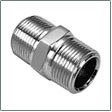
5. Nipple: This is a short butt of a pipe that works as a connection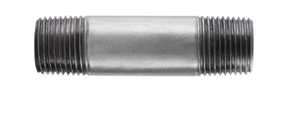 between two other fittings having male threads. A close nipple is a type of pipe fitting having continuous threading on them. They are mostly used in hoses and plumbing.
Available in: Brass, chrome-plated brass, malleable (galvanized and black), PVC, copper, and stainless steel.
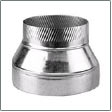
6. Reducer: This pipe setting is used to reduce the flow size of the pipe from the bigger to smaller one. There are two kinds of reducers- concentric reducer and eccentric reducer. 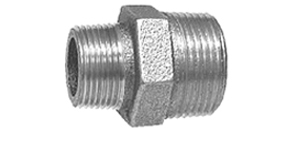 The former one is in the shape of a cone used for gradual reducing of the size of the pipe. The latter one has its one edge facing the mouth of theconnecting pipe reducing the chances of air accumulation.
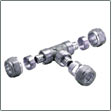
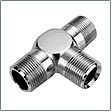
7. Tee: This T-shaped pipe fitting used in the plumbing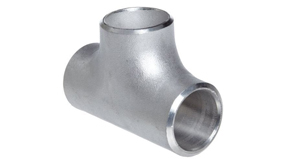 system has one inlet and two outlets arranged at an angle of 90 degrees to the main pipe. This kind of fitting is used to connect the two pipes and make their flow direction as one. If all the three sides of this fitting are same in size, it is called equal tee, otherwise unequal tee.
Available in: ABS, copper, CPVC, PVC, brass, chrome-plated brass, malleable (galvanized and black), and stainless steel.
8. Cross: This type of pipe fitting contains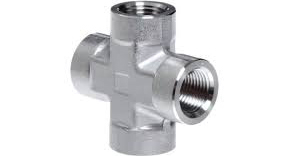 four openings in all thefour major directions. This fitting is adjoined to four pipes meeting at common point. There is either one inlet and three outlets or vice-versa to flow water or any other liquid in four different directions. These kinds of pipe fittings are commonly used in fire sprinkler systems.
Available in: PVC, brass, malleable (galvanized and black), and stainless steel.
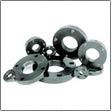
9. Flanges: A flange is another pipe fitting used to connect pipes,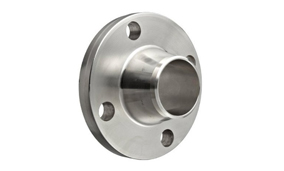 pumps, valves, and other components to form a full-fledged piping system. They come with a flexibility of easily cleaning or inspecting the whole system from within. They are fixed to the pipes using welding, threading or screwing techniques and then finally sealed with the help of bolts. They are used in residential pump systems and majorly for industrial purposes.
Available in: Brass, copper, malleable (galvanized and black), and PVC.
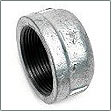
10. Caps & Plugs: Both these pipe fittings are used to close the ends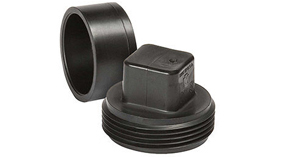 of the pipe either temporarily or permanently. The plugs are fitted inside the pipe and threaded to keep the pipe for future use. There are a good number of ways a cap can be applied to the pipe like soldering, glue, or threading depending on the material of the pipe.
Available in: ABS, brass, copper, chrome-plated brass, malleable (galvanized and black), CPVC, PVC, and stainless steel.
11. Bushings: These pipe fittings are used to combine pipes of different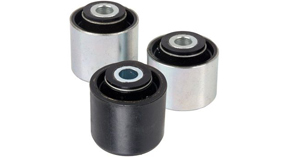 sizes together by decreasing the size of the larger fitting to the size of the smaller pipe. Bushings are not always threaded inside out and occupy very little space in comparison to a union or coupling used for the same purpose.
Available in: ABS, chrome-plated brass, copper, brass, CPVC, PVC, stainless steel, and malleable (galvanized and black).
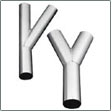
12. Wyes: Such type of pipe fittings are used in drainage systems and have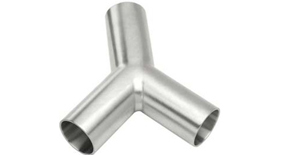 a branch line at 45 degrees to keep the flow of water smooth. When the sanitary tees fail to work in a horizontal connection, such cases needs a wye.
Available in: Brass, ABS, and PVC.
13. Valves: Valves are used in the plumbing system to stop 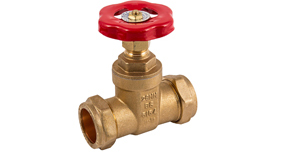 the flow of gases or liquids. There are of three types – throttling, isolation, and non-return. The isolation valves are used to disconnect a part of the piping system temporarily for maintenance or repair. The throttling valves are used to regulate the amount of pressure of a liquid in a pipe; they can also withstand the stress caused by this process.
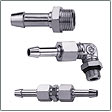
14. Barb: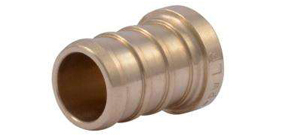 A barb is another useful pipe fitting used in the plumbing system that connects flexible tubing to pipes. It has a male-threaded end on one side that connects with the female threads, and the other end has a single or a multi-barbed tube that is inserted in the flexible tubing.
Available in: Brass for hot water uses and plastic for cold water.
15. Diverter tee: 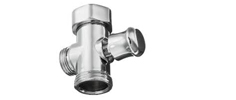 This kind of a tee-shaped pipe fitting is commonly used in the pressurized hydronic heating systems to redirect a part of the flow from the main line to the side branch connected to a heat exchanger.
16. Olet: These fittings are used when the standard size of the fittings fails to serve the purpose.
How are pipe fittings connected to pipes?
Pipe fittings are either male fittings or female fittings. In threaded
pipe fittings, female threads are on the inside while male threads are
on the outside. Pipe fittings that have one female end and one male end
are called street fittings. Pipe fittings are used to connect pipes or
tubes in two ways: