Blind Flanges
A popular category of pipe flange is the blind flange. A blind flange is used to close ends of piping systems. It is a kind of round plate with no center hold but with all the proper bolt holes. This blind flange is available in various sizes and materials and is used to provide positive closer on the ends of pipes, valves or equipment nozzles.
This flange helps in easy access to a line once it has been sealed. The blind flange is sometimes custom made or machined to accept a nominal sized pipe to which reduction is being made. This reduction can be a threaded reduction or welded reduction.
Buying Tips
Certain factors that buyers should consider before buying blind flanges are as follows:
- Size
- Type
- End Type
- Style
- Length
- O.D.
- Pressure Rating
- Thickness
- Mass
- Materials (tested for corrosion resistant)
- Tested and verified for durability, accuracy and precision etc.
Materials used:
Some materials used in the manufacturing of blind flanges are as
follows:
- Stainless Steel
- Nickel Alloy
- Titanium
- Carbon Steel
- Cast Iron
- Brass
- Bronze
- Steel
- Aluminum
- Polypropylene
- Silicone
- PVC etc.
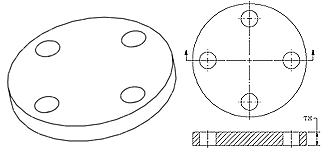 Features of blind flanges:
Some important features of blind flanges are as follows:
- Blind flanges are sometimes supplied with NPT fittings which allow pressure test connections to be fitted.
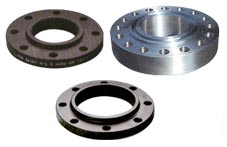
- They are used to blank off the ends of pipe.
- They are also used to blank off the ends of valves and pressure vessel opening.
- Considering factors like internal pressure and bolt loading, blind flanges, especially in the larger sizes, are the most highly stressed of all types of flanges.
- Since the maximum stresses in a blind flange are bending stresses at the center, they can safely be allowed to be higher than in other types of flanges.
- Blind flanges are made to fit standard pipes in all sizes.
The points mentioned below will be a guide for the buyers:
