Steel Pipe Fittings
Steel has been used for making pipe and pipe fittings since years for its durability and strength. Moreover, steel offers high resistance to heat. This property also adds to the popularity of steel for making pipes and pipe fittings. Steel pipes and pipe fittings are widely used in houses and industrial purposes for carrying water, flammable gases, fire sprinkler systems, etc.
As steel pipes tend to rust, they are often mixed with other materials to add to its durability and make it rust resistant.
Buying Tips
- While going for bulk buying of steel pipe fittings, you
should always consider the grade of steel used. The steel grades
vary according to the application.
- The fittings should be rated by standard organizations.
- The internal diameter of fittings should also be checked to
suit a particular application.
|
Varieties of Steel:
Pipe fittings are made of various types of steel like:
- Galvanized Steel: In order to protect steel from rust and
corrosion, steel is coated in layers of zinc through a chemical
process. Galvanized steel offers resistance to rust and corrosion
and is highly preferred for making pipe fittings and pipe.
Galvanized steel also increase the longevity of pipe fittings.
Fittings made of galvanized steel are available in standard sizes
ranging from 8mm to 150mm. Galvanized pipe fittings are usually
manufactured from seamless tube, forgings or rolled bar or welded
tube following some specific standards.
Galvanized steel
pipe fittings are for all types of piping inside a building.
They are also used in water supply lines, but not in gas pipelines.
-
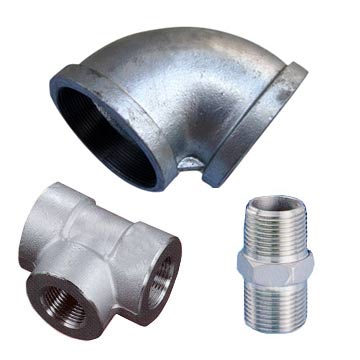 Carbon Steel: Carbon steel is much more durable and stronger than other varieties of steel, which makes it suitable for making pipe fittings. Also known as plain carbon steel, carbon steel is a malleable and iron-based metal, containing mainly carbon and small amounts of manganese and other elements. Steel is subjected to various processes and can either be cast to shape or wrought into various mill forms from which finished parts are formed, forged, stamped, machined or otherwise shaped. Carbon is the main hardening and strengthening element present in steel, which offers maximum hardness and strength; and decreased ductility and weld-ability.
Carbon steel pipe fittings come in various sizes and shapes.
Carbon Steel: Carbon steel is much more durable and stronger than other varieties of steel, which makes it suitable for making pipe fittings. Also known as plain carbon steel, carbon steel is a malleable and iron-based metal, containing mainly carbon and small amounts of manganese and other elements. Steel is subjected to various processes and can either be cast to shape or wrought into various mill forms from which finished parts are formed, forged, stamped, machined or otherwise shaped. Carbon is the main hardening and strengthening element present in steel, which offers maximum hardness and strength; and decreased ductility and weld-ability.
Carbon steel pipe fittings come in various sizes and shapes.
Again there are some butt-weld carbon fittings, which feature beveled edges and form a channel of lesser depth for the bead of weld that fixes the piece together. Butt-weld fittings are mainly used to join sections of pipe where permanent and welded connections are required. Elbows, reducers, tees, etc are made of butt-weld steel fittings.
 Application
of Carbon steel fittings:
Application
of Carbon steel fittings:
Fittings made of carbon steel are used in pipe pipe systems that carry liquids or gases, such as oil, water, natural gas, or steam. Apart from that, carbon steel fittings are highly demanded in construction and maintenance activity in the residential construction, commercial construction, electric-power generation, petroleum refining, shipbuilding and other industrial-use sectors.
Stainless steel: Stainless steel is widely used for making pipe fittings because of the fact that it is highly resistant to oxidation and corrosion in various natural and man-made environments. Stainless steel is actually a ferrous alloy containing minimum 10% chromium. Selection of right grade of stainless steel for a particular application is really important. A range of pipe fittings like tees, unions, elbows, etc are made of stainless steel. Stainless steel
fittings are usually used for household pipelines.
The points mentioned below will be a guide for the buyers:
