
 The
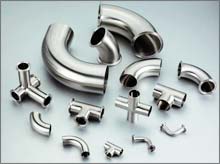
recent boom of private entrants in the petrochemical sector have placed a heavy demand on pipe fitting industry. Ongoing projects for
construction of distribution lines require a high grade of pneumatic industrial fittings and fluid components. The use of fittings and
flanges made from specialty alloy have become a common practice in industry.
The
recent boom of private entrants in the petrochemical sector have placed a heavy demand on pipe fitting industry. Ongoing projects for
construction of distribution lines require a high grade of pneumatic industrial fittings and fluid components. The use of fittings and
flanges made from specialty alloy have become a common practice in industry.
There are various applications of pipe fitting in petrochemical industry. Besides pipelines, these fittings can be used in research laboratory, pilot plants and factories. Supplying a right components for laboratory pose as major challenge, as the chemicals under test are highly corrosive. Moreover, the high temperature and pressure conditions may cause leakage in the connection. Hence proper sealing of joint with corrosion and heat resistant pipe fittings and flanges are the foremost requirement.
Pipe fittings used in gas, oil and petrochemical industry should be traceable, precisely accurate and manufactured from high quality steel or its alloy. OEMs (Original Equipment Manufacturers) across the industry verticals are constantly upgrading equipment for boosting their supply.
Chemical plant requires specialty pipe fittings that can withstand the effects of batch and continuous processing, fluid flow, heat and mass transfer, etc. As most the processes are on a continual basis, it is important to make replacements as quickly as possible. This not only minimizes the disruption but also reduces the possibility of accidents.
The pipe fittings and flanges used in petrochemical industry are subjected to scrupulous testing. They must fulfill the requirement for high mechanical strength, while being resistant to chemical and atmospheric agents. They should also be able withstand the varying weather conditions.
Duplex and carbon steel are some of the most preferred alloys used for making pipe fittings and flanges for petrochemical industry. Besides the quality of material, engineering plays a pivotal role in ensuring reliability of the pipe fittings. Fittings that can easily be installed and removed always makes a right choice. All the fitting and flanges shall undergo magnet particle inspection, liquid penetrant inspection, ultrasonic inspection, hardness surveys and hydrogen induced cracking test.